
MHG MHG

Biography

Aditya Lakher is the editor of The Mad Honey Guide and an SEO Analyst and Content Ecosystem Manager at Himaida Nepal Pvt. Ltd. Based in Kathmandu, Nepal, he has spent years building a reliable resource for readers navigating mad honey’s effects, safety, dosage, and legality. His editorial focus is on accuracy, source transparency, and consumer safety ensuring every article reflects current research rather than commercial interest.

Disclosure

Declared interests

The Mad Honey Guide publishes educational articles on mad honey’s science, safety, culture, history, and regulation. We sell no products, recommend no sellers, and publish no dosing instructions. Our content does not replace professional medical or legal advice.

Articles by aditya

Law

Mad Honey Effects: What’s Normal, What’s Not, and When to Stop

There is no guaranteed “normal” response to mad honey because grayanotoxin levels and individual sensitivity can vary considerably. Dizziness, nausea, weakness, fainting, confusion, chest discomfort, repeated vomiting, or a slow or irregular heartbeat are warning signs not evidence that the honey is simply “working.”
Published 9 Sep 2026. Last reviewed 9 Sep 2026. 1,876 words

Safety

Mad Honey Benefits and Risks: What’s Real, What’s Unproven, and How to Approach It Safely

Mad honey has a long history of traditional use, but claims involving energy, sexual performance, blood pressure, pain, and other health benefits are not supported by reliable clinical evidence. Its risks are better established: grayanotoxins can cause nausea, dizziness, fainting, dangerously low blood pressure,…

Published 9 Sep 2026. Last reviewed 9 Sep 2026. 1,848 words

Science

Grayanotoxin Explained: Why Mad Honey Feels Different (And What “Safe” Really Means)

**Standfirst** Grayanotoxins make mad honey feel different by disrupting normal electrical signalling in nerves and muscles, potentially causing dizziness, weakness, nausea, low blood pressure, and a slowed or irregular heartbeat. “Safe” cannot be reduced to a spoon size or seller’s claim because toxin concentration…

Published 9 Sep 2026. Last reviewed 9 Sep 2026. 1,564 words

Law

Is Mad Honey Legal? What “Legal” Actually Means (US, UK, Canada, and More)

Mad honey does not have one universal legal status: rules differ by country and may involve food safety, import controls, labelling, health claims, and customs requirements rather than drug law alone. A product being available online or not classified as a controlled substance does…

Published 9 Sep 2026. Last reviewed 9 Sep 2026. 1,640 words

Culture

Xenophon’s Mad Honey Story: What Happened, Where It Happened, and Why It Still Gets Cited

In the *Anabasis*, Xenophon reports that Greek soldiers near Trapezus on the Black Sea ate local honeycomb, became disoriented and violently ill, and temporarily collapsed before recovering. The passage remains one of the earliest detailed accounts consistent with grayanotoxin poisoning, although identifying mad honey…

Published 9 Sep 2026. Last reviewed 9 Sep 2026. 1,688 words

History

The History of Mad Honey: From Ancient Warfare to Modern Wellness

Mad honey appears in ancient accounts of armies incapacitated near the Black Sea and in long-standing traditions across present-day Türkiye and Nepal. Its modern reinvention as a wellness product draws on that history, but traditional use and dramatic historical stories do not establish contemporary…

Published 9 Sep 2026. Last reviewed 9 Sep 2026. 1,441 words

Culture

Himalayan Mad Honey: What It Really Means, Where It’s From, and How to Spot the Real Thing

“Himalayan mad honey” generally refers to honey from Himalayan regions that may contain naturally occurring grayanotoxins derived from certain rhododendron flowers. Geography, colour, taste, and cliff-harvest imagery cannot confirm authenticity on their own; credible verification requires traceable origin and batch-specific laboratory evidence.

Published 9 Sep 2026. Last reviewed 9 Sep 2026. 1,506 words

Culture

Mad Honey Nepal: How It’s Harvested, Where It Comes From, and Why It’s So Rare

Nepalese mad honey comes from wild mountain hives where bees forage on certain rhododendron flowers whose nectar may contain grayanotoxins. Its limited flowering season, remote cliff locations, dangerous harvesting conditions, variable composition, and small-scale production make genuine harvests scarce but a Nepal origin claim…

Published 9 Sep 2026. Last reviewed 9 Sep 2026. 1,751 words

Guides

Mad Honey Mead: What It Is and Why It Needs a Safety-First Explanation

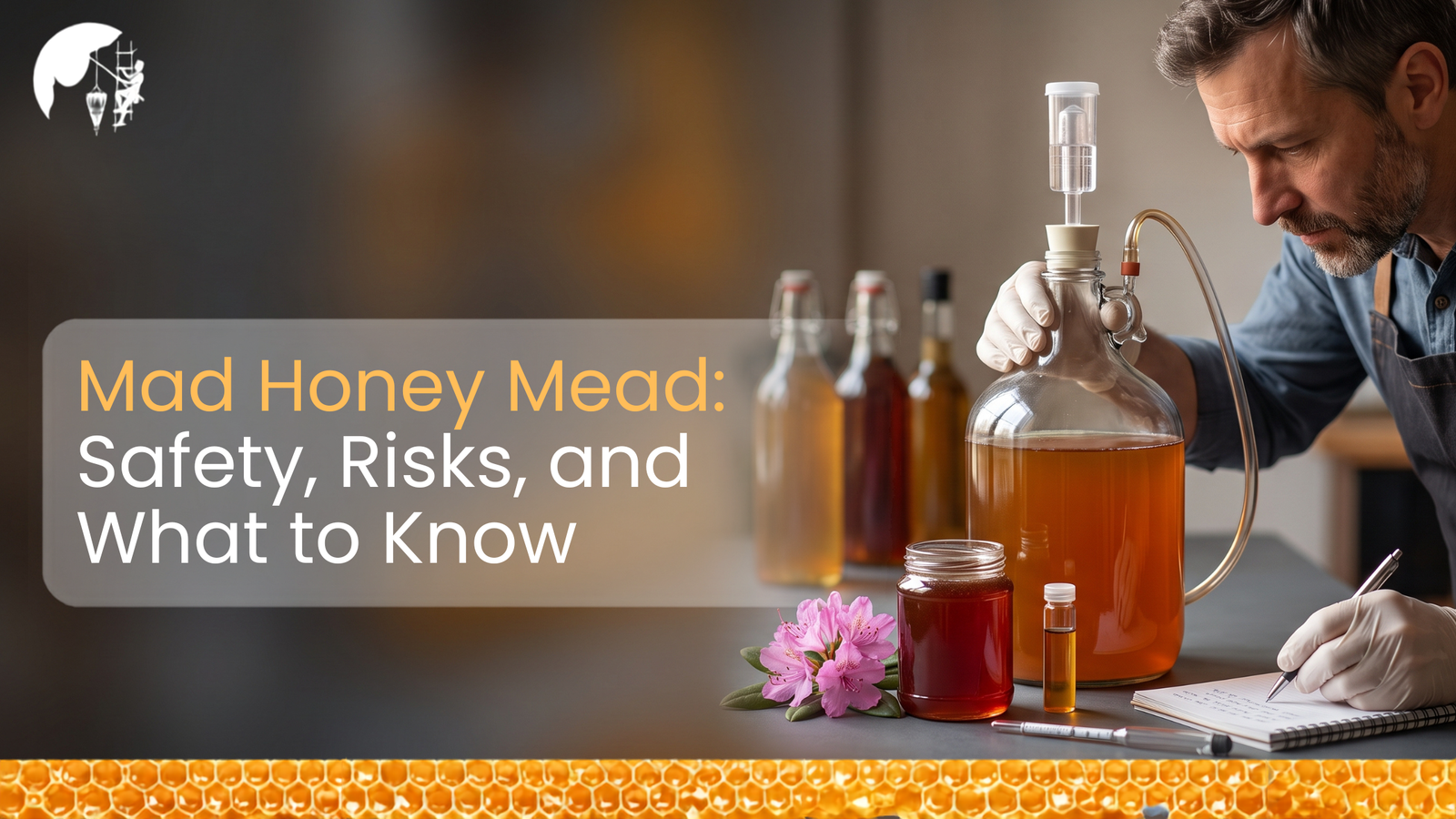
Mad honey mead is an alcoholic fermented drink made with mad honey, so it may combine alcohol with an unknown and variable level of grayanotoxins. Fermentation, flavour, or a traditional recipe cannot prove that those toxins have been removed or that the finished drink…

Published 9 Sep 2026. Last reviewed 9 Sep 2026. 2,594 words

Comparisons

Mad Honey vs Manuka Honey: What’s Different and Which One Should You Choose?

Mad honey and mānuka honey are not interchangeable: mad honey may contain variable grayanotoxins capable of causing poisoning, while mānuka is valued for its floral origin and measurable quality markers rather than intoxicating effects.

Published 21 Aug 2026. Last reviewed 21 Aug 2026. 1,248 words

Showing 10 of 17. Pagination is server rendered and linkable, never infinite scroll.

All authors Challenge a claim

One email a month, when there is something worth saying.

Get new research summaries, major safety updates, Himalayan harvesting stories, and country-specific legality changes, without daily marketing emails.

No product promotions. Unsubscribe anytime.