
MHG MHG

Your Trusted Guide to Mad Honey

An independent guide to mad honey, what it is, how it affects the body, where it comes from, and how it is regulated. We sell no products, recommend no sellers, and publish no dosing instructions.

Explore Our Latest Guides

Read our newest evidence-led guides to mad honey. Each article separates established facts from traditional beliefs, emerging research, and unsupported claims.

Independently written · No product sales · Evidence-led guides

Read All Articles

Every articles is carefully sourced and written without product promotion or dosing advice.

Browse the archive
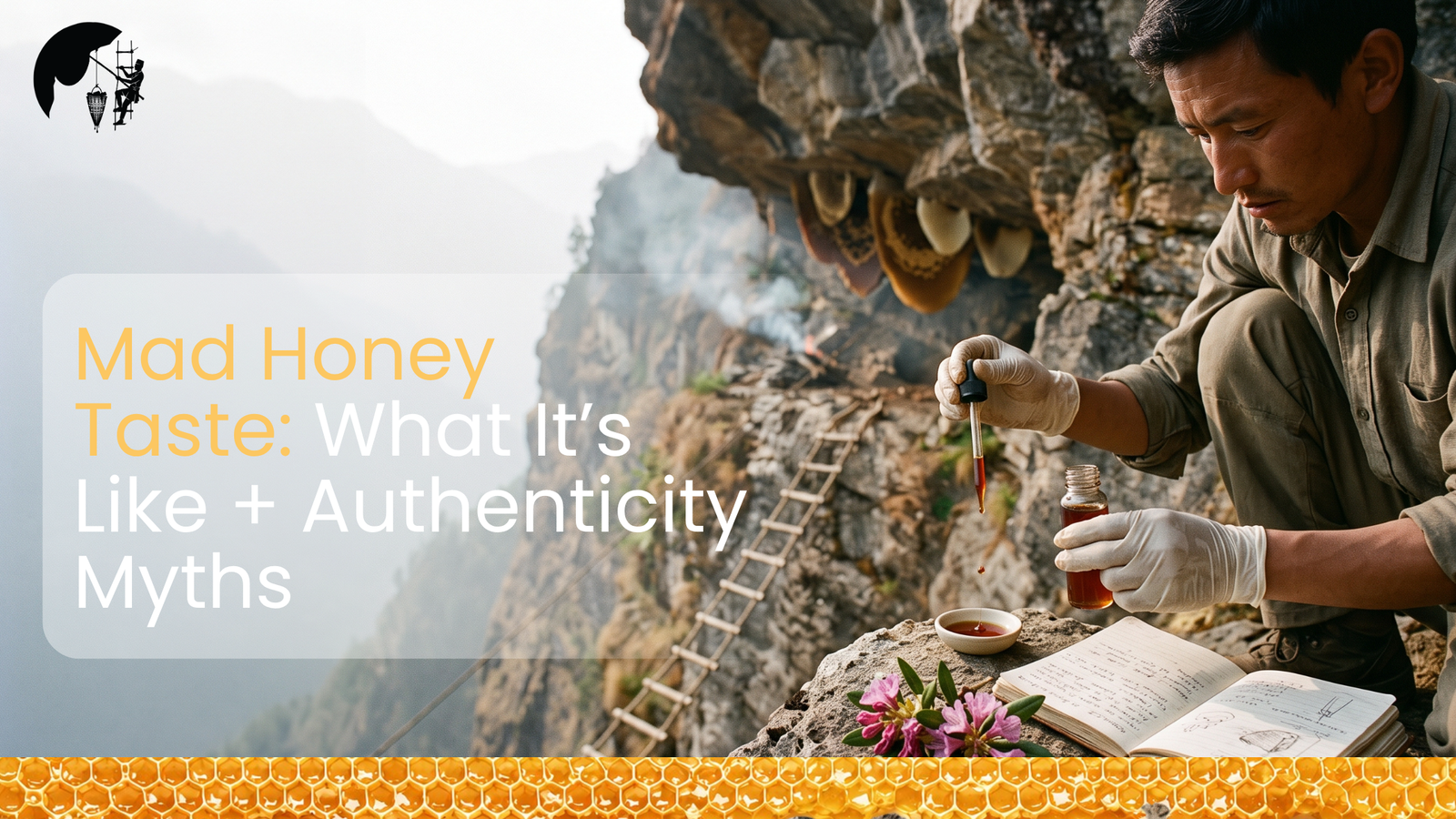
Basics aditya Mad Honey Taste: What It’s Like (and What Taste Can’t Prove)

Mad honey is often described as earthy, floral, slightly bitter, and less uniformly sweet than ordinary commercial honey, but its flavour varies with nectar source, season, region, and…

10 Min Read 21 Aug 2026
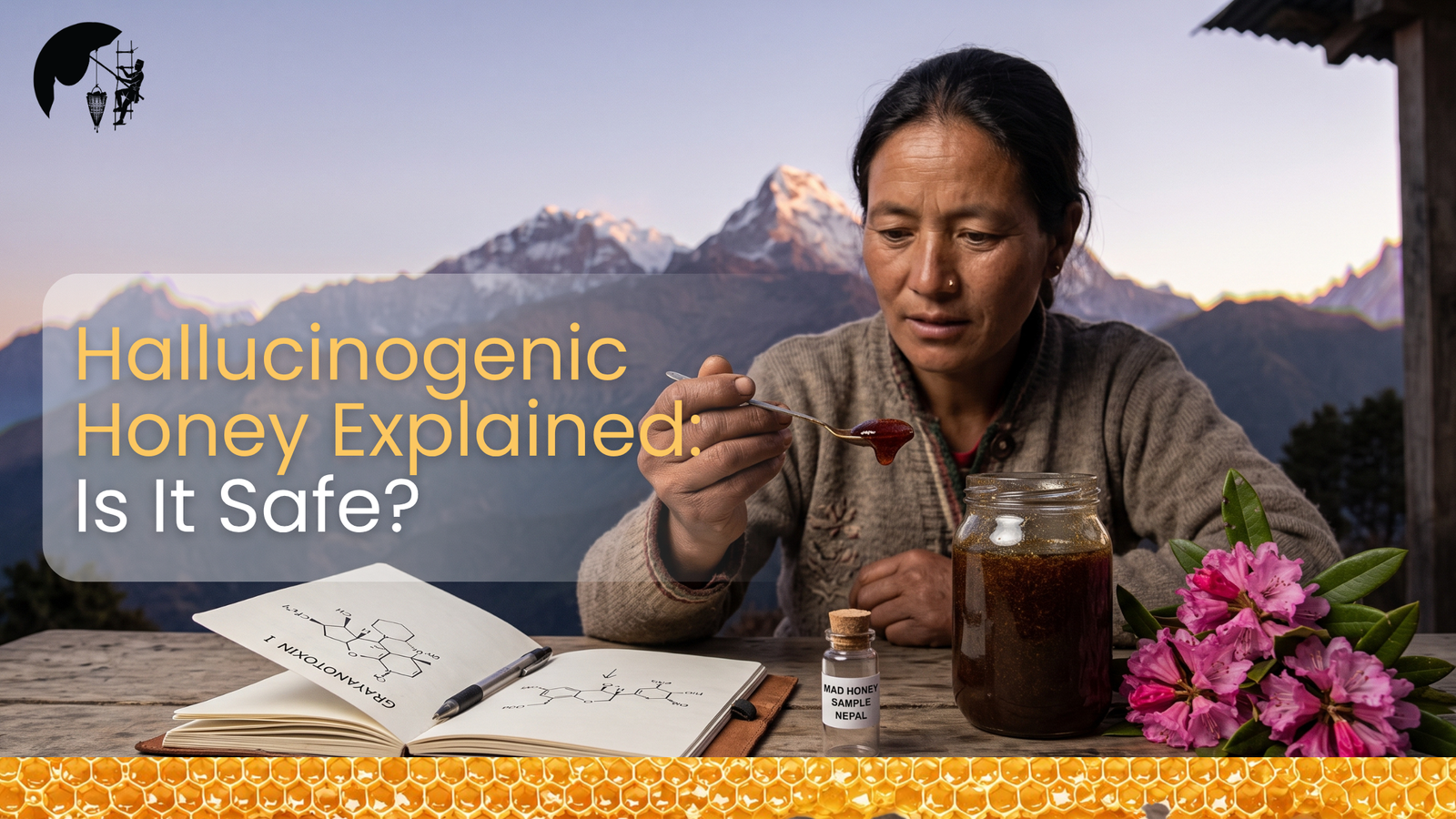
Basics aditya Hallucinogenic Honey Explained: Is It Real, What Causes It, and Is It Safe?

Hallucinogenic honey” is a popular but misleading name for mad honey containing naturally occurring grayanotoxins from certain rhododendron flowers. It may cause dizziness, confusion, visual disturbance, and altered…

13 Min Read 21 Aug 2026
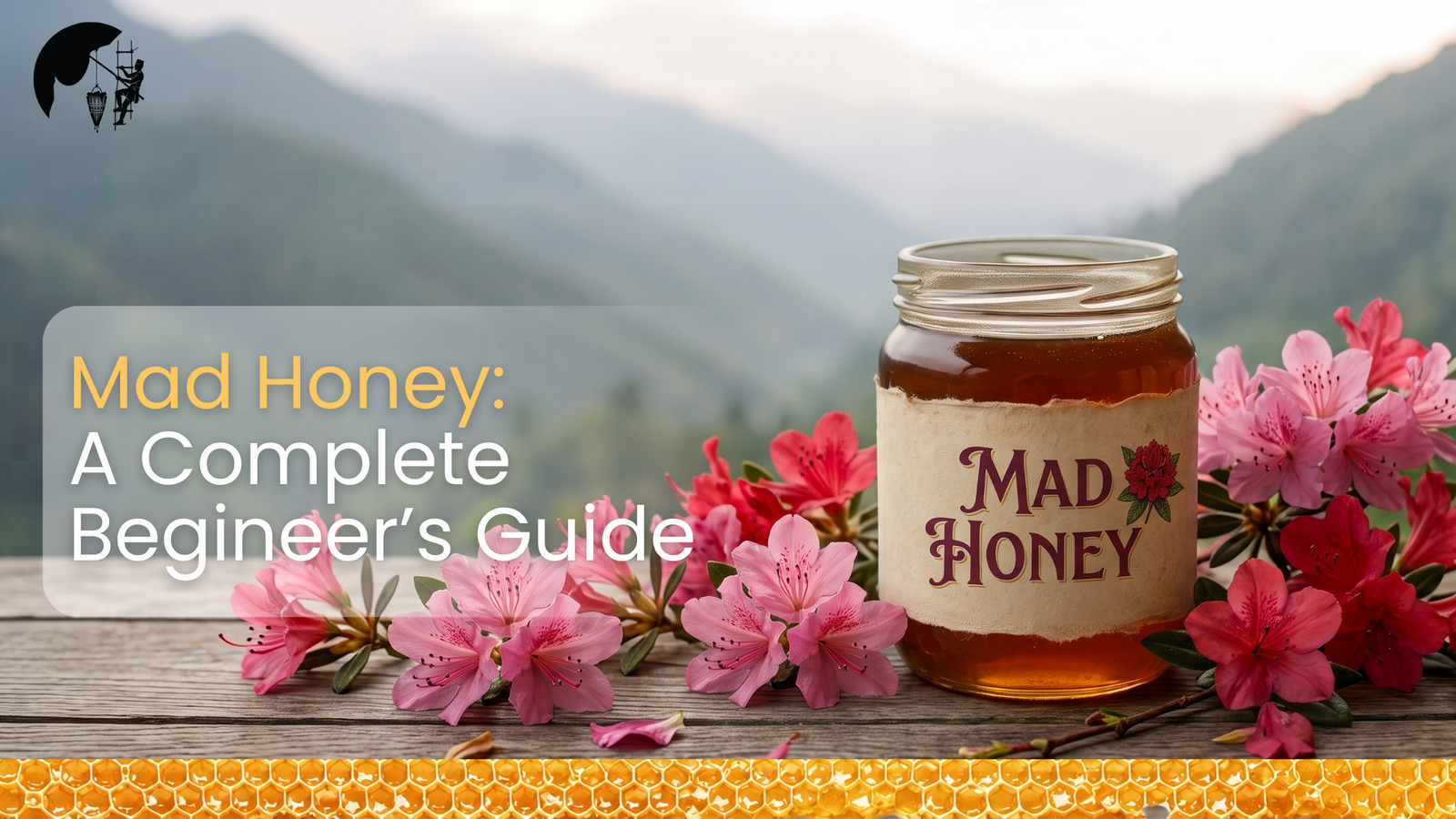
Basics aditya What is Mad Honey? A Complete Beginner’s Guide (Effects, Safety, and What to Expect)

Mad honey is honey containing naturally occurring grayanotoxins from certain rhododendron flowers, most commonly associated with Nepal and the Black Sea region of Türkiye. Its composition and effects…

10 Min Read 21 Aug 2026
Law aditya Mad Honey Effects: What’s Normal, What’s Not, and When to Stop

There is no guaranteed “normal” response to mad honey because grayanotoxin levels and individual sensitivity can vary considerably. Dizziness, nausea, weakness, fainting, confusion, chest discomfort, repeated vomiting, or…

11 Min Read 9 Sep 2026
Safety aditya Mad Honey Benefits and Risks: What’s Real, What’s Unproven, and How to Approach It Safely

Mad honey has a long history of traditional use, but claims involving energy, sexual performance, blood pressure, pain, and other health benefits are not supported by reliable clinical…

11 Min Read 9 Sep 2026
Science aditya Grayanotoxin Explained: Why Mad Honey Feels Different (And What “Safe” Really Means)

**Standfirst** Grayanotoxins make mad honey feel different by disrupting normal electrical signalling in nerves and muscles, potentially causing dizziness, weakness, nausea, low blood pressure, and a slowed or…

9 Min Read 9 Sep 2026

We publish no dosing figures

You will not find a spoon count, weight, volume, or “start with this much” recommendation on this site. That is a deliberate editorial rule.

Mad honey can contain grayanotoxins, and toxin levels may vary between harvests, locations, and batches. Its colour, flavour, origin, or label cannot reliably establish how much toxin a jar contains.

Showing 6 of 17.

Legality by country

Mad honey is almost never named in law. Food-standards regulation, novel-food rules and customs classification decide the answer, so the status below describes how the rules are applied, not a statute with the words "mad honey" in it.

Law by country

Country

Personal possession

Sale as food

Import by post

Last checked

Page

United Kingdom

Not restricted

Restricted

Must be declared

2 Aug 2026

Read

United States

Not restricted

Restricted

Subject to inspection

2 Aug 2026

Read

Canada

Not restricted

Restricted

Must be declared

29 Jul 2026

Read

Australia

Not restricted

Restricted

Prohibited

29 Jul 2026

Read

New Zealand

Not restricted

Restricted

Prohibited

29 Jul 2026

Read

Netherlands

Not restricted

Conditional

Must be declared

24 Jul 2026

Read

India

Not restricted

Conditional

Must be declared

21 Jul 2026

Read

Singapore

Unclear

Restricted

Prohibited

21 Jul 2026

Read

Philippines

Unclear

Conditional

Must be declared

18 Jul 2026

Read

This is general information about published rules, not legal advice, and it is not a route around any control: where something must be declared, declare it. If something has changed, tell the corrections desk and we will re-check the page.

What people ask

Does mad honey get you high?

Not in the way the word usually means. The reliable reports describe a heavy, warm, sedated state with tingling and nausea, driven by falling blood pressure and a slowing heart, closer to feeling faint than to a psychedelic. Visual hallucination is rare in the clinical literature and, where it appears, it is usually alongside a collapse rather than instead of one. Full answer

How long do the effects last?

In the published case series most people are back to normal within a day, and the hospital stay is usually short. The reason we describe it as a range rather than a number is that onset is unpredictable: it has been recorded within minutes and also several hours after eating, which is why “nothing has happened yet” is not reassurance. Full answer

How much should I take?

This is the one question on the site that gets an explanation instead of an answer. Nobody can give a safe amount for a jar they have not had tested, because two jars from the same hillside can differ enormously in grayanotoxin content. We publish no figure, and we explain the reasoning in full rather than pretending the question has a number in it. Read the reasoning

How can I tell if mad honey is real?

Not by colour, not by the burn in the throat, and not by price. The only thing that separates rhododendron honey from ordinary honey with confidence is a laboratory assay for grayanotoxins, and our guide explains what such a report contains and which parts of it actually mean something. Full answer

Is mad honey an aphrodisiac?

The claim is old, commercially useful, and the human evidence for it is close to nothing. What exists is a handful of animal studies, some folk reporting, and a plausible confusion between flushing, warmth and low blood pressure on the one hand and arousal on the other. We say so plainly rather than hedging. Full answer

Is red mad honey stronger than the darker kind?

There is no reliable relationship between colour and grayanotoxin content. Tone tracks the rhododendron species, the altitude, the season and how long the honey has sat, none of which is a proxy for potency. Treating a deep red jar as a strong one is a guess dressed up as a test. Full answer

Sourced, reviewed, dated, and open about who we are

Every claim is sourced

Statements about effects, risk or treatment link to a named case series, toxicology review or poisons centre. Where a claim rests on a single small study, the sentence says so.

Medically reviewed

All Safety and Science articles are reviewed by a clinician before publication. The reviewer is named at the top of the page along with the date they signed it off.

Dated and re-checked

Every article carries a publication date and a last checked date. Law pages are re-checked at least twice a year, and a visible changelog records what moved.

Corrections in public

When we get something wrong we correct it on the page, keep the old wording visible in the note, and list it on the corrections index. Nothing is quietly edited.

One email a month, when there is something worth saying.

Get new research summaries, major safety updates, Himalayan harvesting stories, and country-specific legality changes, without daily marketing emails.

No product promotions. Unsubscribe anytime.